Xi Calls U.S. and Russia: Beyond Joint Management of Taiwan Strait
China Times Opinion, February 5, 2026
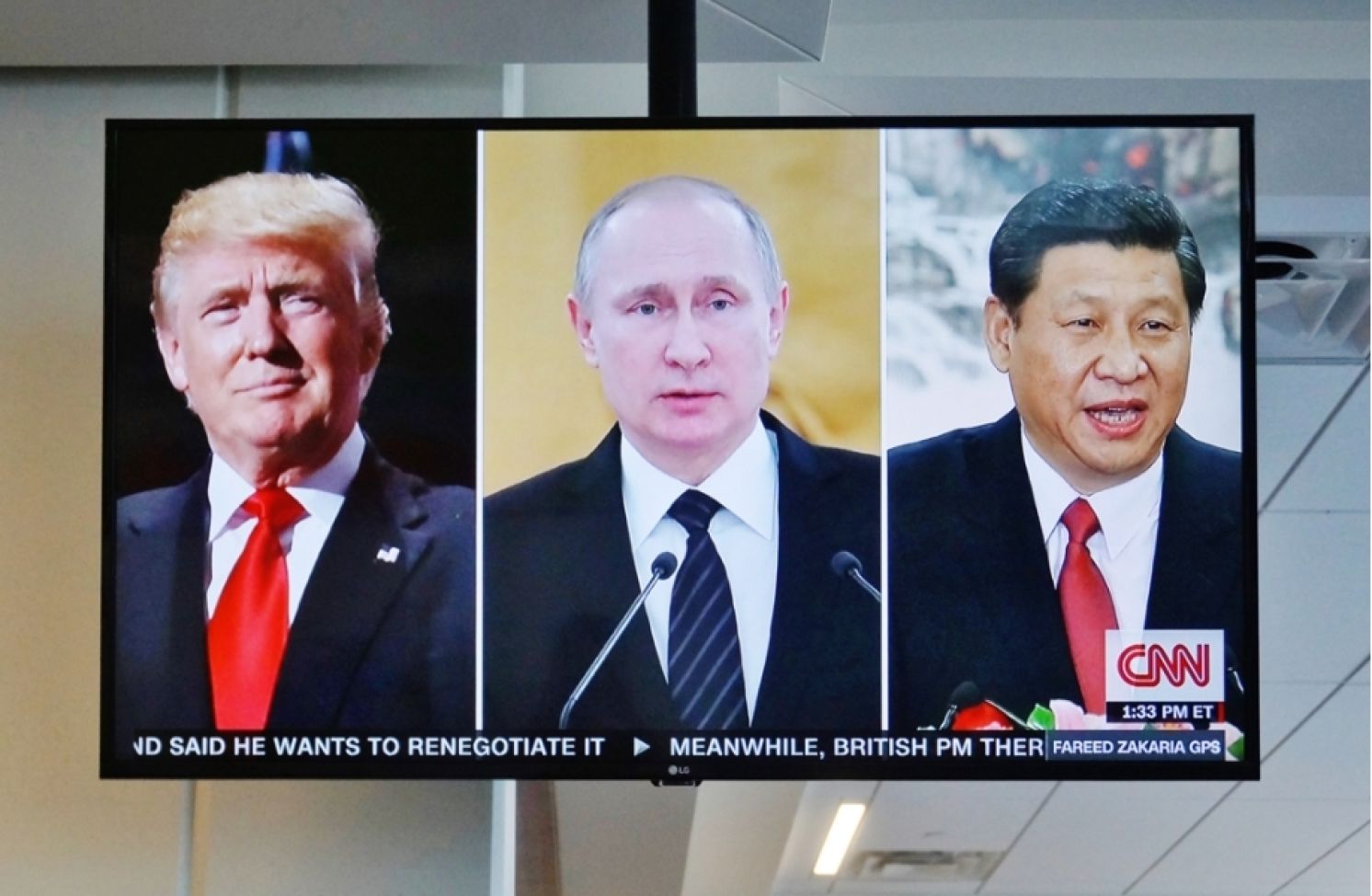
After a video conference with Russian President Vladimir Putin on February 4, Chinese President Xi Jinping had an unannounced phone call with President Donald Trump of the United States. This unusual situation was clearly strategic communication that bypassed diplomatic protocol: Major power leaders spoke directly to make things clear and avoid misjudgment. This is extremely rare in great-power competition and usually only occurs when something has happened and there is an urgent need to deal with it.
Therefore, Xi’s initiative in calling the Russian and American leaders cannot be simply interpreted as a new form of Chinese diplomacy or as paving the way for a “Trump-Xi meeting.” In a competitive context, the party that initiates the call implies that it “needs something,” and whoever calls first is considered to have lost.
Remember last April, when Trump repeatedly called on Xi to call him to talk, yet waited in vain? This time, Xi’s initiative in calling Trump must have had an important reason, and it may be related to Russia, because Xi spoke with Putin first and then with Trump.
The world is a chessboard. To clarify the situation, we need to sort out the timeline of world events. On February 1, Russian Security Council Secretary Shoigu suddenly arrived in Beijing and left after only one day. Shoigu is a close confidant of Putin, and his visit should have been on a mission to seek China’s help. Help with what? On February 2, Trump announced a trade agreement with India, under which India would stop purchasing Russian oil in exchange for tariffs being reduced from 50 percent to 18 percent. Russia’s fiscal revenue depends entirely on oil and gas exports. Europe is no longer buying, India is no longer buying, and if China also stops buying, Russia’s finances will collapse.
In addition, Trump has threatened the use of force to instigate regime change in Iran. If successful, American influence would directly enter the Caucasus region, which is Russia’s back door. Russia wants to prevent this, but the only major card it holds is nuclear weapons. The U.S.-Russia New START Treaty, which came into effect in 2011, expired on February 5, and UN Secretary-General Guterres is urging the United States and Russia to quickly sign a new agreement. If Putin is unwilling to show weakness by proactively calling Trump, then asking Xi to call is the only reasonable choice. This is why Trump said that he and Xi had completed a “very wonderful” phone call, lasted a long time and covered very in-depth content, including Taiwan, Russia, the war in Ukraine, the situation in Iran.
In essence, China, which has long kept a low profile and been unwilling to manage international affairs, has begun to step forward to “broker matters” at Russia’s urging. Moreover, the only major power leader who can now change Trump’s mind is Xi; other leaders from Russia, Europe, India, and so on should step aside. If this trend continues, then in the future the United States and China may not only jointly manage the Taiwan Strait, but may also jointly manage the whole world.
Therefore, the world is not unchanging, but is undergoing rapid transformation. When interpreting the “Trump-Xi call” on February 5, President Lai Ching-te indicated that four things remain unchanged with the U.S.-China-Taiwan trilateral relationship: First, the Republic of China (ROC) and the People’s Republic of China (PRC) do not belong to each other. Second, the United States’ commitments under the Taiwan Relations Act and the Six Assurances to Taiwan remain unchanged. Third, the direction of U.S. alliances and partner countries sharing defense burdens to maintain peace and stability in the Indo-Pacific remains unchanged. And fourth, U.S.-Taiwan relations remain rock-solid, and all cooperation programs will continue without change. However, these four points may only be President Lai’s “wish list.”
The Trump-Xi call mentioned “arms sales to Taiwan,” which should be the mainland’s response to recent pressure from the American Institute in Taiwan (AIT) and U.S. senators to pass a special defense budget. Trump is eagerly looking forward to his April visit to China, and Beijing has also promised to purchase oil and natural gas from the United States and is also considering additional purchases of agricultural products. Whether Trump sacrifice these for the interests of arms dealers remains to be seen.
Although the Central News Agency inquired with the White House by e-mail and received a response that “policy toward Taiwan has not changed,” the world will be concerned with whether to believe the background briefing from this unnamed official, or Trump’s statements on his social media. The answer is beyond doubt.
(The author is the Executive Director of the Taiwan International Strategic Study Society.)
From: https://www.chinatimes.com/opinion/20260205004112-262104?